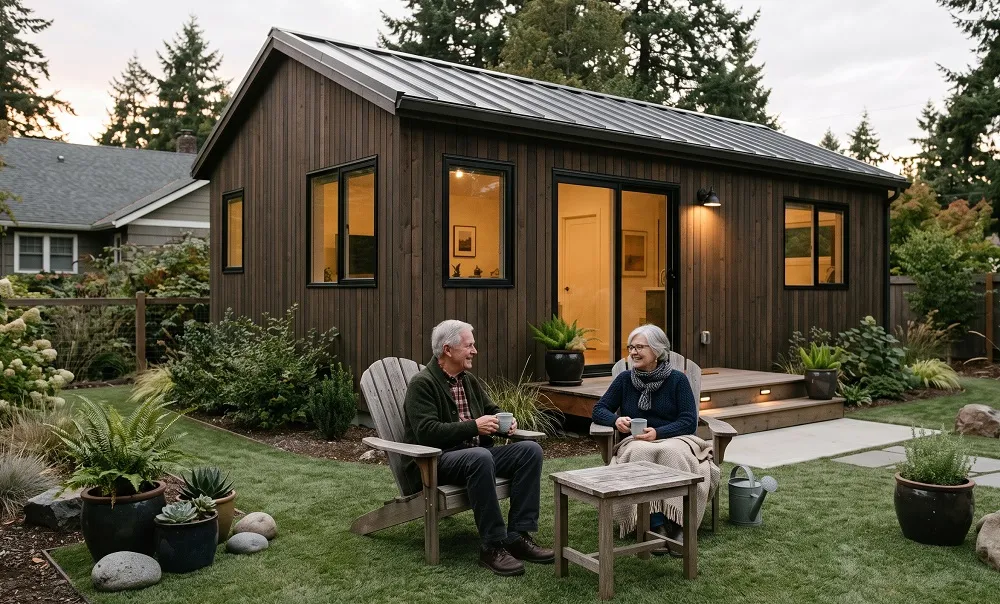
At Streamline Design & Permitting, we monitor ADU permitting in San Diego as part of how we support our clients. We track jurisdictional permit volumes, review cycle patterns, policy implementation timelines, and construction trends across the region. A modern, stylish accessory dwelling unit (ADU) in a sunny San Diego backyard. Warm coastal sunlight, architectural photography style, clean lines, cozy and inviting atmosphere. Professional, high-end real estate look, 8k resolution.
The picture that emerges from our analysis of 2020 through 2024 permitting data is unambiguous: ADU development has shifted from a niche residential option to one of the primary drivers of new residential construction in San Diego County. Here's what the numbers show and what they mean for homeowners planning a project in 2026.
The Numbers: A Four-Year Surge Across San Diego County

San Diego County issued 3,991 ADU permits in 2024 — up from just 1,150 in 2020. That's a 247% increase over four years, and one of the most dramatic sustained growth curves we've tracked in any residential permit category in this region.
Even more telling is what happened on the construction side: ADU completions, projects that received a certificate of occupancy, not just a permit approval, rose from 342 in 2020 to 1,984 in 2024, a 480% increase.
That gap between permits and completions is narrowing steadily, revealing a maturing pipeline. Earlier in the cycle, many permitted projects stalled in construction or were abandoned. Today, the ratio of completions to permits reflects a market where homeowners are following through. San Diego County ADU permits more than tripled in four years, rising from 1,150 in 2020 to 3,991 in 2024. Over the same period, completed ADUs increased by 480%. Both figures reflect sustained demand, not a single-year spike.
Within that countywide figure, the City of San Diego accounts for the largest single share—more than 2,285 ADU homes permitted within city limits in 2024 alone, representing approximately 26% of the city's total housing production for the year. In 2019, that number was fewer than 500. The trajectory isn’t by chance: it reflects the compounding effect of state law reforms, local program incentives, and a homeowner market that has absorbed ADU development as standard practice.
County-Wide ADU Growth by the Numbers
These figures aren’t projections or estimates. They reflect actual permit and certificate-of-occupancy activity across the region. For homeowners wondering whether ADU demand has peaked, the data makes one thing clear: it has not.
Where the Growth Is Happening Across the Region
The City of San Diego leads permit volume, but ADU activity is distributed across the county in ways that matter for project planning. Unincorporated San Diego County ranked second in total ADU permits in 2024, with communities including Lakeside, Fallbrook, Spring Valley, and Ramona driving a meaningful share of that volume — a pattern consistent with what we see in our own project mix. Chula Vista, Vista, and Encinitas round out the top five jurisdictions by permit count.
The numbers in unincorporated San Diego County are particularly striking: in 2024, ADUs accounted for approximately 45% of all newly permitted housing units in the unincorporated areas. Over the 2021–2024 period, that figure ranged between 30-45% depending on the year. In practical terms, ADUs have become the primary mechanism by which new housing is being added to large portions of San Diego County's residential landscape.
What This Means for Unincorporated San Diego County
In areas where single-family lots are larger and detached ADUs are genuinely feasible, nearly half of all new housing production is now ADU-driven. For homeowners in these communities, this is a clear validation of demand. However, it also means competition for licensed contractors, utility service windows, and plan check capacity. Timing and preparation are even more important than they were three years ago.
Regional ADU Activity at a Glance
What Rising Permit Volume Means for Your Project Timeline
The same surge that validates ADU demand also creates real operational consequences for projects in 2026. Higher application volume means plan check departments across San Diego County are managing more files simultaneously. State law mandates a 60-day ministerial review window for complete ADU applications but the word "complete" is doing significant work in that sentence.
Incomplete submittals reset the 60-day clock. Cities must conduct a 15-business-day completeness check, but each resubmission triggers a new review cycle. In a high-volume environment, the gap between first submission and permit issuance widens quickly when documentation is missing, inconsistent, or fails to meet coordination requirements across zoning, fire, energy, and structural disciplines.
State law protects the 60-day ministerial review window but only for complete applications. In the current San Diego permitting environment, a first-time complete submittal is the single most reliable way to protect your project timeline. One correction cycle can add 30 to 60 days or more.
From our own project management work across San Diego County, the delay triggers we see most frequently are consistent and largely preventable. They aren’t products of the ADU law itself; they are products of coordination failures that surface during review.
- Structural documentation gaps — missing or inconsistent calculations that require an engineer's resubmission before the city can continue review.
- Title 24 energy compliance errors — outdated calculations or specifications that don't align with the plans as drawn.
- Fire access and setback conflicts — hydrant distance, sprinkler requirements, and clearance issues that surface during building review rather than in design.
- Utility coordination failures — sewer capacity, electrical panel upgrades, and stormwater requirements that aren't resolved before the application is filed.
- Tree planting ordinance omissions — multi-ADU projects that trigger San Diego's tree planting requirements but don't include landscaping details in the submittal package.
All of these are caught during plan check, not during design. With the right planning, all of them are avoidable.
The 2026 Policy Shifts That Change the Calculus
Permit volume doesn’t happen in isolation. Three major policy changes in 2025 and early 2026 are already reshaping how ADU projects should be planned and scoped this year.
ADU Separate Sale Is Now Available in San Diego
Assembly Bill 1033, which allows ADUs to be sold independently as condominiums rather than as appurtenances to the primary dwelling, has moved from a state-level option to a local reality in San Diego. The City adopted a separate sale ordinance effective August 2025.
The County followed with a unanimous Board of Supervisors vote on March 4, 2026, establishing a program for separate ADU sales in unincorporated communities through a condominium conversion process. For homeowners building with long-term goals like equity growth, generational wealth planning, or future exit flexibility, this can meaningfully change the overall investment equation.
Multifamily Lots Can Now Support Up to Eight Detached ADUs
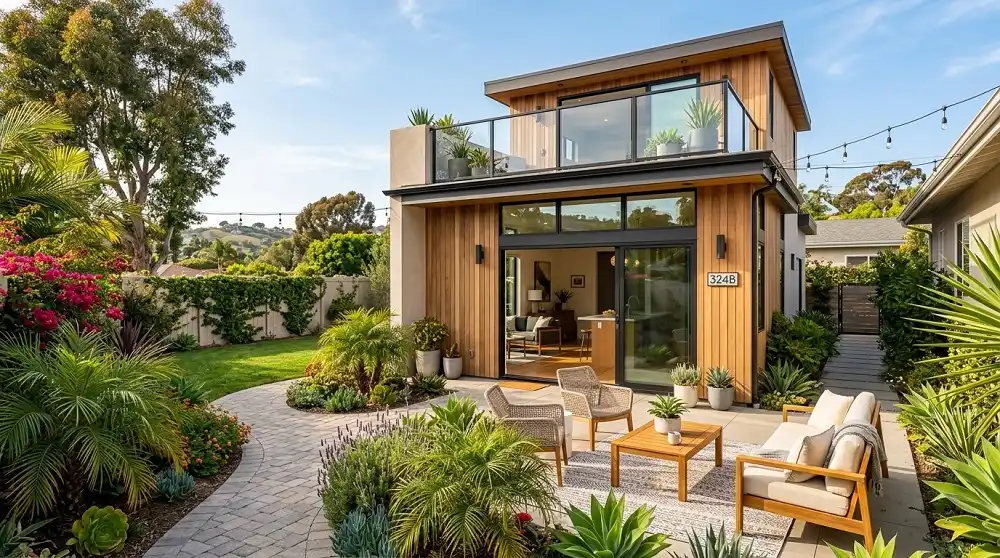
SB 1211, effective January 2025, expanded the number of detached ADUs permitted on multifamily lots to match the existing unit count, up to a maximum of eight. For owners of duplexes, triplexes, and small apartment buildings across San Diego, this opens development potential that simply didn't exist under prior law. Our team has seen this reflected in project inquiries early in 2025, and the pattern has continued.
Fee Structure Protections Are Holding, But Know Your Thresholds
The 2026 ADU Handbook addendum reaffirms that impact fees cannot be charged for units under 750 square feet, with proportional fees applying above that threshold. With the county's five-year impact fee waiver program having expired in January 2024, project budgeting now must account for fees that didn't apply to applications filed before that date. This can create sticker shock for homeowners who are comparing current project estimates to what a neighbor paid to build two or three years ago.
The separate sale provision is reshaping how some clients think about scope and design from the outset. When an ADU is designed with future condominium conversion in mind, it requires a different approach to documentation, finish specifications, and legal structuring than a typical rental unit.
We’re building those questions into feasibility reviews early, before floor plans are finalized. Trying to retrofit the documentation later can be expensive, time-consuming, and far more disruptive.
What the Data Means If You're Planning an ADU in 2026
High permit volume is a signal of market validation, not a reason for hesitation — but it raises the bar on project management. The clients we move through San Diego's permitting process most efficiently share a consistent set of habits: they start with a thorough feasibility review before committing to a design direction, they coordinate all technical disciplines before submission, and they don't count on revision cycles to resolve conflicts that should have been caught in design.
The 2026 ADU Handbook addendum has reduced ambiguity in how local agencies must apply state law. Cities can no longer impose subjective design standards that conflict with state allowances. Parking exemptions and setback protections are reaffirmed.
For most standard detached ADUs that meet the 800-square-foot minimum, 16-foot height allowance, and 4-foot setback baselines, denial on discretionary grounds is foreclosed. The path to approval is clearer than it has been in years. Whether your specific project follows this clear path comes down to execution.
- Start with a formal feasibility review — confirm zoning, utility access, fire overlay requirements, and lot constraints before committing to a design direction. Surprises at this stage are far less expensive than surprises at plan check.
- Coordinate all disciplines before submittal — structural, energy, fire, and utility documentation needs to align with the architectural plans before the application is filed, not after the first correction notice arrives.
- Build your timeline around reality — most ADU projects in San Diego run 6 to 10 months from design start to final inspection. Clients who plan around a 3-month timeline create pressure that results in errors and ultimately extends the process.
- Know which jurisdiction governs your property — the City of San Diego and unincorporated San Diego County operate under different programs, different fee schedules, and different overlay requirements. Confirming your parcel's jurisdiction should be step one, not an afterthought.
- Factor the new policy landscape into your scope decisions — the separate sale provision, SB 1211 multifamily allowances, and the current fee structure all influence how a project should be scoped and documented from the first conversation.
Plan Your 2026 ADU Project with Confidence
San Diego’s ADU surge is more than a housing trend — it is a clear signal that homeowners are using their properties to create rental income, family housing, and long-term equity. But in 2026, success depends on more than demand. It requires accurate feasibility planning, coordinated documentation, and a first-time-complete permit strategy. With policy changes expanding what is possible, now is the time to plan carefully and move with confidence. Ready to start your ADU project? Request a project review with Streamline today.