Starting a kitchen renovation in California without proper permits can lead to expensive fines, forced demolition of completed work, and serious complications when selling your home. Many homeowners discover too late that projects they assumed were simple actually required city approval and inspections.
Professional San Diego building permit services like ours at Streamline Design & Permitting can help you determine exactly which permits your kitchen remodel needs and guide you through the approval process smoothly.
California Kitchen Permit Requirements: What Triggers the Need?
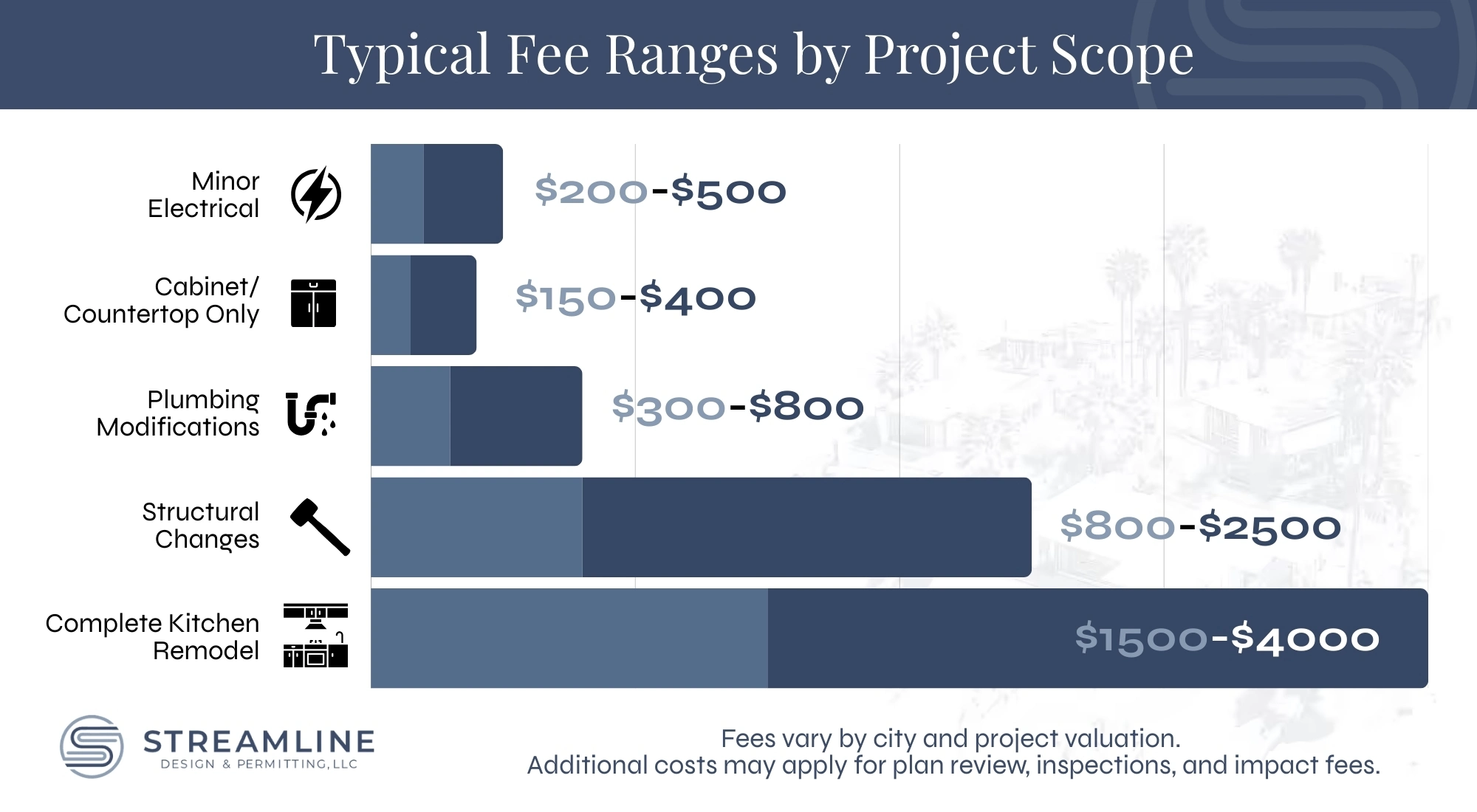
Most kitchen renovation projects in California require building permits when they involve structural, electrical, plumbing, or mechanical system changes. The California Building Standards Code establishes baseline requirements, but individual cities add their own regulations that can be stricter than state minimums.
Structural Work Always Requires Permits
Simply put, any project that affects your home's structural integrity needs permit approval and professional inspections. Removing walls, adding walls, or modifying load-bearing components requires detailed project plans that a building inspector must review before work begins. This is because cities want to ensure your structural changes won't compromise the safety of your home or neighboring properties.
Note: Even non-load-bearing wall removal typically requires permits in most California jurisdictions because it affects the overall building structure.
Electrical System Modifications Need City Approval
Electrical work beyond simple fixture replacements requires permits to ensure safety regulations and fire hazard prevention. Projects requiring permits include:
- Installing new circuits or outlets: Adding electrical capacity for new appliances requires proper wiring and inspection to prevent overloads.
- Moving existing outlets or switches: Relocating electrical components involves opening walls and running new wiring that must meet current code requirements.
- Upgrading electrical panels: Increasing your home's electrical service capacity requires licensed contractor work and multiple inspections.
- Installing recessed or track lighting: New light fixtures that require additional wiring or modify existing circuits need permits.
Plumbing System Changes Require Permits

Moving plumbing fixtures or adding new water connections triggers permit requirements across California. For example, relocating your sink, installing a dishwasher in a new location, or adding plumbing fixtures all require city approval. The permitting process ensures that plumbing work meets California Building Code standards for water pressure, drainage, and venting.
Cities require detailed site plans showing exactly where new plumbing will run and how it connects to existing systems. To verify proper installation, schedule inspections at multiple stages (before covering pipes and after completion).
HVAC and Mechanical System Updates
Any changes to your kitchen's heating, ventilation, or cooling systems require permits in California. Installing range hoods with external venting, adding heating elements, or modifying mechanical systems all need approval from local authorities. These permits ensure that air quality, ventilation rates, and mechanical systems comply with current building codes.
Kitchen Projects That Don't Need Permits in California
California allows certain cosmetic and surface-level kitchen updates without building permits, saving homeowners time and permit fees. Only replacing existing components with similar materials, without modifying underlying systems, typically qualifies as permit-exempt work.
Surface Updates You Can Complete Permit-Free
- Painting walls and ceilings: Applying new paint or wallpaper requires no permits regardless of scope, making it the simplest and fastest way to refresh your kitchen's appearance.
- Replacing countertops: Swapping out countertop surfaces with similar materials doesn't require permits if you're not moving plumbing or modifying cabinet layouts.
- Cabinet refinishing or replacement (same configuration): Updating kitchen cabinets through painting, staining, or replacing doors keeps the existing layout and doesn't trigger permit requirements.
- Flooring updates: Installing new tile, hardwood, laminate, or vinyl flooring requires no permits when you're working within the existing floor structure.
- Backsplash installation: Adding or replacing decorative backsplash tile behind sinks and stoves counts as cosmetic work that needs no city approval.
Note: While these projects don't require permits, they must still meet building codes for materials and fire safety. ADU permit costs follow different rules than primary residence remodels.
The California Kitchen Permit Application Process
Securing building permits for your kitchen remodel in California involves several steps that protect both homeowners and contractors. Local building departments review your plans to ensure compliance with the California Building Standards Code and municipal regulations before issuing necessary permits.
Step 1: Prepare Detailed Project Plans
First, ensure your permit application needs comprehensive drawings showing all proposed changes. Plans should include measurements, materials specifications, electrical modifications, plumbing systems changes, and structural alterations. Most cities require licensed professionals to stamp certain plan types, particularly for electrical systems and structural work.
Step 2: Submit Application and Pay Permit Fees
Next, visit your local building department or development services department with completed plans, project descriptions, and required documentation. Permit fees vary by project's scope and aggregate valuation, typically ranging from a few hundred to several thousand dollars, depending on the complexity of the remodeling project.
Step 3: Plan Review and Approval

Building officials will then review submitted plans for code compliance, checking that proposed work meets safety regulations and zoning requirements. Review times vary from one week to several months based on jurisdiction workload and project complexity. Cities may also request revisions before approving.
Step 4: Schedule Inspections Throughout Construction
Proper permits require multiple inspections at key project stages. Building inspectors verify that the work matches approved plans and meets building codes before allowing you to proceed. Typical inspection points include rough framing, electrical rough-in, plumbing rough-in, and final inspection after the work is completed.
Most jurisdictions in San Diego require at least three separate inspections for kitchen remodels involving multiple systems. Understanding San Diego ADU setback requirements helps if you’re planning kitchen expansions near property lines.
What Happens If You Remodel Without the Required Permits?
This isn’t a boundary that you want to test. Unpermitted work creates serious legal and financial consequences that often cost more than obtaining proper permits in the first place. California cities actively enforce building codes and can discover violations during routine inspections, neighbor complaints, or when you try to sell your home.
Immediate Penalties and Stop-Work Orders
Cities can issue stop-work orders requiring the immediate stop of construction when they discover unpermitted work. Property owners face daily fines, often $500 to $1,000 per day, until they obtain retroactive permits and pass inspections. These penalties continue accumulating until the project becomes compliant.
Required Demolition of Completed Work
Building departments can order the removal of unpermitted work that doesn't meet code requirements. This means tearing out finished cabinets, countertops, or electrical work and starting over with proper permits. The demolition and reconstruction costs far exceed initial permit fees, turning affordable updates into expensive disasters.
Home Sale Complications and Legal Liability
Unpermitted kitchen remodels create title issues that prevent home sales from closing. Buyers' lenders typically refuse to finance properties with known unpermitted work, and home inspectors routinely flag suspicious updates. Sellers must disclose unpermitted modifications that can significantly reduce property values and buyer interest.
You also face liability if unpermitted work causes fires, flooding, or injuries. Insurance companies can deny claims related to unpermitted modifications, leaving you personally responsible for damages. Learning about retroactive building permits helps resolve existing violations.
How to Choose Between DIY and Professional Permit Management
Deciding whether to handle permits yourself or hire professionals depends on your project's complexity, local officials' requirements, and your comfort with construction documentation. Simple projects with minimal structural or system changes may work for self-management, while complex kitchen remodels benefit from experienced permit expeditors.
When Homeowners Can Manage Permits Themselves
Small kitchen updates, such as cabinet replacement in the same configuration or countertop swaps with no plumbing modifications, work well for DIY permit applications. If your project involves only one trade (electrical or plumbing, not both) and requires no structural changes, managing your own permits is a great way to save money while also providing a valuable learning experience.
You'll need to prepare clear drawings, research submittal requirements for your jurisdiction, and schedule inspections appropriately. We recommend budgeting extra time for plan review and potential revision requests from building departments.
When Professional Help Becomes Essential
Complex kitchen remodels involving multiple systems, structural modifications, or historic review benefit significantly from professional permit management. Licensed contractors and permit expeditors know exactly what local building departments expect and can navigate various aspects of the approval process efficiently.
Professional help also prevents costly mistakes that occur when homeowners misread code requirements or submit incomplete documentation. These experts maintain relationships with city inspectors and understand how to address concerns quickly. Projects in jurisdictions known for strict enforcement, like central San Diego, often justify professional assistance from the start.
If you’re considering a garage conversion with ADU, this requires professional architectural services because of structural complexity and multiple permit types.
Your Kitchen Remodel Deserves Professional Permitting Support
California's complex permit requirements protect homeowners from unsafe construction while ensuring kitchen remodels meet building codes and safety regulations. Projects involving structural changes, electrical modifications, plumbing work, or mechanical systems require proper permits and inspections throughout construction.
Looking for a trusted partner for this process? Streamline Design & Permitting brings over 25 years of expertise in helping San Diego homeowners navigate kitchen remodel permits successfully. Allow our team to handle detailed project plans, permit applications, and inspection coordination so your renovation stays on schedule and fully compliant. Contact us today for a free consultation to make your kitchen renovation smooth, legal, and stress-free from design through final inspection.