Planning to build an accessory dwelling unit in San Diego? One of the first questions every homeowner asks is: How long will this actually take? The answer depends on a combination of factors, including your project type, application quality, and property conditions. One of the most important factors in 2026 is how well your submission package holds up against the City of San Diego's Development Services Department (DSD) plan check process.
At Streamline Design & Permitting, we track permit activity, legislative changes, and project outcomes across San Diego County to give homeowners a realistic picture of the ADU permit timeline. Here’s what our research shows.
How Many ADU Permits Is San Diego Processing?
San Diego's ADU permit volume has grown dramatically over the past several years, and that growth directly shapes how the system handles applications.
Permit Volume Growth
According to our research, the number of ADUs permitted across San Diego County more than tripled between 2020 and 2024, while completed ADUs—those receiving certificates of occupancy — increased by 480% over the same period, rising from approximately 342 to nearly 2,000 completed units annually.
Within the City of San Diego, over 2,285 ADU homes were permitted in 2024 alone, representing a significant share of the city's 8,782 total new homes permitted that year. ADU-specific activity accelerated further in 2025, with 1,122 ADU permits issued compared to 538 in 2024, which is a 108.6% year-over-year increase. With 241 permits issued in just the first two months of 2026, current trends suggest demand will continue growing.
What this means for applicants:
- The DSD is processing more ADU applications than at any prior point in the city's history.
- Higher application volume creates greater demand on reviewer capacity at every stage of the plan check.
- Well-prepared, complete submittals are increasingly the deciding factor in how quickly a project moves through the queue.
The Baseline: How Long Does ADU Permitting Take in San Diego?
The key to understanding the permitting timeline is recognizing that the design and documentation phase is separate from the city review process. Both matter, and each has its own variables. The building permit process in San Diego runs through several departments simultaneously, which is why ADU projects consistently take longer than standard residential work.
Overall Residential Permit Processing Times
Our tracking of City of San Diego DSD data found that the average residential permit took roughly 176 calendar days to move from initial submission to final approval in 2024. That represents a meaningful increase from around 115 days in 2020, reflecting both the growth in application volume and the increasing complexity of code requirements over that period.
That said, the distribution is wide:
- Approximately 15% of residential permits are processed in under one week.
- Roughly 40% of residential permits take between one and six months.
- About 25% of residential permits take six months or longer.
ADU projects tend to fall into the middle and longer categories because they require coordinated review across multiple departments, such as planning, structural engineering, building code compliance, and utilities, each of which must sign off independently before a permit can be issued.
Typical ADU-Specific Timelines
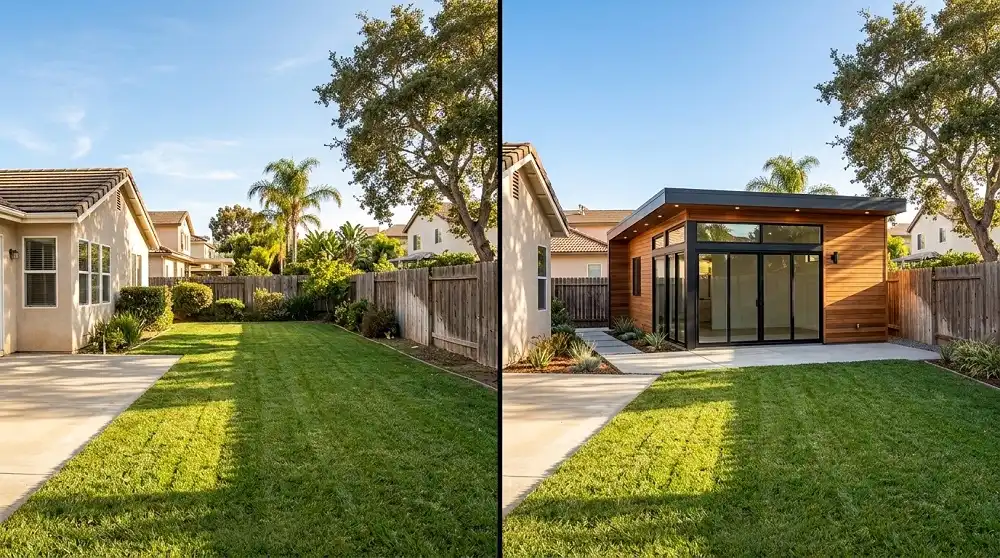
For a standard detached ADU in the City of San Diego, here’s what you can expect during the permit process:
- Plan preparation phase (1–2 months): Architectural drawings, structural engineering, Title 24 energy compliance documentation, and MEP coordination. This phase happens before the application is even submitted to the city.
- Pre-screen phase (2–4 weeks): After submission to DSD, the city verifies that the application is complete before assigning it to a plan checker.
- First plan check cycle (3–6 weeks): Plans are distributed to planning, structural, combined review, and other applicable departments. Each must independently review and respond.
- Correction response (2–4 weeks): Most projects receive correction comments and must be revised and resubmitted.
- Subsequent review cycles (2–4 weeks each): On average, ADU projects in San Diego go through three to four review cycles before receiving all departmental approvals.
- Permit issuance (approximately 1 week): After all corrections are resolved and fees are paid, the permit is issued.
For most standard detached ADU projects, the total timeline from submission to permit issuance runs approximately 2.5 to 6 months. If your project is in a coastal zone, historic district, or fire hazard severity zone, or involves unusual site conditions, you should expect the permitting timeline to be longer.
What Causes Plan Check Delays?
The permit timeline is largely within the applicant's control, not because the city's schedule can be changed, but because application quality directly determines how many correction cycles a project goes through.
The Most Common Triggers for Correction Notices
In our experience processing ADU permits across San Diego County, most plan check corrections can be traced back to the following documentation issues:
- Missing or inaccurate setback dimensions: Failing to show all required setback measurements from correct property lines — not fences or assumed boundaries — is the single most frequent reason for a correction notice in San Diego County.
- Incomplete or missing Title 24 energy compliance documentation: Any addition over 100 square feet requires a Title 24 report. Submitting without it triggers an immediate correction.
- Lot coverage calculation errors: Forgetting to include existing structures, such as garages, sheds, covered patios, when calculating total lot coverage against the applicable zoning limit.
- Structural and architectural coordination gaps: Inconsistencies between the architectural plans, structural engineering pages, and Title 24 documentation cause reviewers to flag incomplete submittals.
- Easement conflicts: Proposed ADU placement within recorded utility or drainage easements will be flagged during planning review.
- Outdated code references: As of 2025, California's updated energy code requires electric heat pumps for new ADUs. Plans prepared from older templates that don't reflect this result in corrections that could have been avoided altogether.
Each correction cycle resets the clock on DSD's review timeline. A project that goes through three correction cycles instead of one can add 2-4 months to the approval process, increasing carrying costs while extending the overall timeline. Our breakdown of ADU permit costs in San Diego covers how those delays translate into real budget impact.
How SB 543 Changes the Timeline Picture in 2026
Effective January 1, 2026, Senate Bill 543 introduced the most significant procedural change to California ADU permitting in years, shifting accountability onto local agencies and giving property owners enforceable statutory rights for the first time.
The 15-Day Completeness Rule
Under SB 543, the City of San Diego's DSD now has a strict 15-business-day deadline, which is approximately three calendar weeks, from the date an ADU application is received to issue a written completeness determination. If the city misses that deadline, the application is automatically deemed complete, and the standard 60-day review clock starts.
Before SB 543, no such deadline existed for the completeness review phase. Cities could leave applications in a queue without formally acknowledging them, which meant the 60-day approval clock never actually began. SB 543 closes that gap entirely.
What SB 543 Means for Your Submittal
SB 543 introduced several additional protections that directly affect how ADU permit applications are processed:
- When an agency identifies missing items, it must provide a specific written list of what is incomplete and explain how each item can be corrected.
- On resubmittal, the agency can only review items it previously flagged; it cannot introduce new objections after the fact.
- If the agency fails to approve or deny a complete application within 60 days, the permit is automatically deemed approved, and the applicant may proceed with construction.
- Applicants now have a statutory right to appeal an incompleteness determination to the local planning commission or governing body.
The practical effect is this: a complete, well-organized ADU submittal now has a clear, enforceable path through the review process. An incomplete one still restarts the clock and hands the review advantage back to the city.
Coastal Zone Properties: What AB 462 Changed
For homeowners in San Diego's coastal communities, permitting timelines have historically been influenced by a separate layer of review: the Coastal Development Permit (CDP).
Before and After AB 462
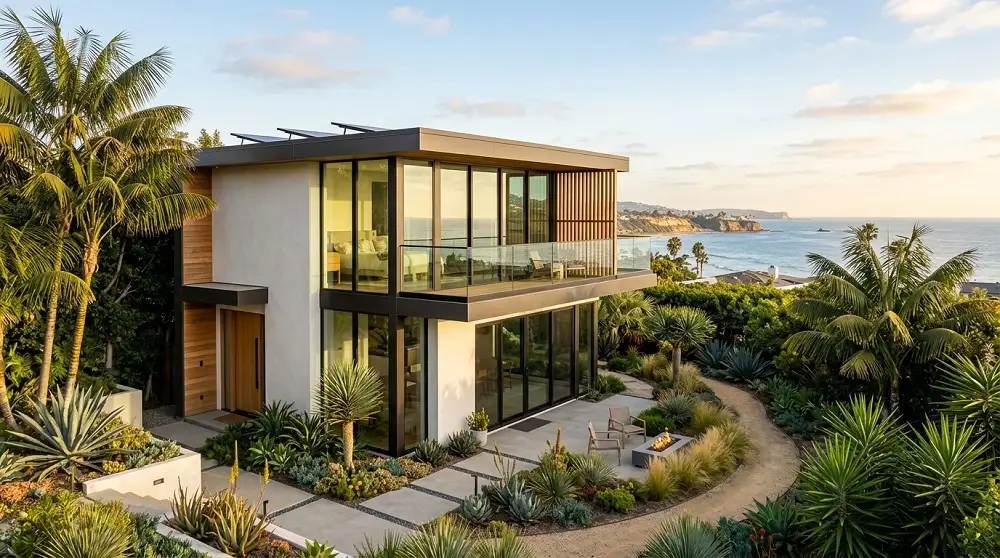
Before AB 462's enactment, ADU projects within San Diego's Coastal Zone required a CDP in addition to the standard building permit. The challenge was that the CDP process had no legal deadline. Even if the standard ADU review was subject to a 60-day limit, the accompanying CDP review could stretch on for six months or more than a year.
AB 462, which took effect January 1, 2026, subjects CDP review to the same 60-day shot clock as standard ADU permits. For the City of San Diego, which holds a certified Local Coastal Program, the CDP must be approved or denied within 60 days of a complete application — running concurrently with, not sequentially after, the standard ministerial review.
This change applies directly to ADU projects in:
- La Jolla
- Ocean Beach
- Pacific Beach
- Mission Beach
- Solana Beach
- Coronado and other coastal communities throughout the city
For homeowners in these neighborhoods, the combination of AB 462 and SB 543 represents a meaningful reduction in the unpredictability that previously made coastal ADU permitting one of the most difficult permitting environments in San Diego County.
Pre-Approved Plans: The Fastest Path Through the System
One of the most reliable ways to reduce the ADU permit timeline in San Diego is using a pre-approved plan set rather than a fully custom design. This option isn’t available for every project, but when it applies, it can significantly shorten the approval timeline.

How Pre-Approved Plans Affect Review Times
As of January 2026, all California jurisdictions are required to maintain pre-approved ADU plans online. For applications using pre-approved plan sets, first-round review minimums are set at 30 days, and the City of San Diego's Express Plan Check program provides accelerated review on eligible projects at 40–50% faster turnaround than the standard track.
Pre-approved and express options are best suited for:
- Detached ADUs on standard lots without unusual topography or zoning overlays
- Garage conversions where the existing structure meets dimensional requirements
- Projects where the homeowner's design preferences align with available standard plans
Custom designs that maximize square footage, address unusual lot conditions, or target the 1,200 square foot maximum will still require the full review process. But documentation quality on those submittals still determines how many cycles it takes — and that remains entirely within the applicant's control. Not sure whether a pre-approved plan fits your project? Our guide to San Diego pre-approved ADU plans walks through what's available and how to qualify.
How Application Quality Translates to Time Saved
The relationship between submittal completeness and approval speed is direct. Our internal experience processing ADU permits across San Diego County is consistent with the broader pattern in the city's permitting data: projects that clear plan checks with minimal corrections often receive permits much faster than those that go through multiple rounds of revisions and resubmittals.
The elements that most consistently determine first-cycle performance are:
- Coordinated architectural, structural, and Title 24 documentation: These three document sets must be internally consistent. Reviewers across departments are looking for alignment between what the architectural drawings show and what the structural and energy calculations confirm.
- Current code compliance: Every submittal at Streamline is checked against the City of San Diego's current plan check checklist and updated California ADU law before it leaves our office. Using outdated setback standards, fee schedules, or energy requirements in a drawing set can lead to unnecessary corrections during plan review.
- Accurate site documentation: Property line dimensions, setback measurements, existing structure footprints, utility connections, and easement locations must all be shown correctly — these are the most frequent sources of first-cycle corrections on San Diego ADU submittals.
- Complete permit package: A single missing document, such as the Title 24 report, a structural engineering page, or the property owner authorization form, can trigger a correction that delays the entire review cycle.
A complete, well-organized drawing set that arrives with a correct application now has a statutory pathway to approval that property owners can hold the city to. That is the core promise of SB 543, and it is only activated by a clean first submittal.
What This Means for Your San Diego ADU Project Timeline
Based on our research into San Diego permit data and project outcomes across San Diego County, here’s a realistic summary of what applicants can expect in 2026:
These timelines only reflect the review phase. The design and documentation preparation phase add one to two months before submission, and construction follows permit issuance — typically five to seven months for a standard detached ADU.
Moving Forward with Your San Diego ADU Permit
The fastest ADU permits go to applicants who arrive complete on first submission — and the slowest go to those who don't. At Streamline Design & Permitting, every submittal goes through an internal compliance review, with structural and Title 24 documentation coordinated as a unified package and drawing standards updated whenever California's ADU laws change. Contact Streamline Design & Permitting for a free consultation, and we'll give you a realistic picture of your property's timeline before you commit to a design.


.webp)

