There are many San Diego homeowners sitting on untapped goldmines above their garages who rarely realize the rental income potential hovering overhead. That existing space could generate $2,000 to $3,000 monthly while you keep your parking spots intact.
As local specialists who handle both ADU drafting and permit management, Streamline Design & Permitting knows exactly which of San Diego's 18 jurisdictions allow 30-foot heights versus 16-foot limits. In this guide, we break down structural requirements, actual project costs from recent builds, design constraints specific to vertical construction, and permit timelines across different San Diego cities.
Is Your Property Eligible for an Above-Garage ADU in San Diego?
Not every detached garage can support 800 square feet of livable space overhead. Your property needs specific zoning, structural capacity, and utility access to qualify for vertical ADU construction. Each San Diego jurisdiction adds its own twist to state accessory dwelling unit built laws.
- Zoning and height requirements vary by jurisdiction: San Diego allows 21 feet for flat roofs and 30 feet for sloped roofs, but Carlsbad caps at 16 feet, while Encinitas permits 24 feet on half-acre lots.
- Structural foundations need professional assessment: Pre-1970 garages typically support only 40 pounds per square foot when living space requires 100 pounds of capacity, demanding engineering evaluation.
- Fire separation demands specific materials: Type X gypsum board between garage and living space adds $15 to $25 per square foot, but is mandatory for permits.
- Electrical systems need major upgrades: Your main panel must provide 200-amp service minimum, often requiring complete upgrades from older 100-amp systems.
- Plumbing infrastructure requires verification: Sewer laterals need camera inspection to confirm capacity, especially for pre-1980 properties with clay or cast iron pipes.
- Septic systems face additional requirements: Properties without city sewer need percolation tests and potential tank upgrades, adding 3-6 months to timelines.
- Utility grid capacity affects feasibility: SDG&E's Small Lot Analysis Tool determines if transformers can handle additional loads, with some blocks requiring $10,000 to $25,000 upgrades.
Note: Coastal Overlay Zone properties outside Transit Priority Areas must replace any converted covered parking, making above-garage ADUs the smarter choice since parking stays intact.
Professional feasibility studies determine structural capacity and code compliance before you invest in architectural plans. Site-specific evaluations catch expensive surprises early, potentially saving tens of thousands in unexpected reinforcement costs.
Why Vertical Construction Wins
A one-bedroom carriage house ADU commands premium rents that average $200 to $500 more monthly than garage conversions. Tenants pay extra for elevated views, natural light from multiple exposures, and complete separation from the main residence. Plus, your property maintains full yard access for kids, pets, and entertaining.
The vertical configuration is especially beneficial to properties in beach communities where garage ADU conversion cost includes mandatory parking replacement. Building upward sidesteps this expensive requirement altogether.
Carriage house ADUs justify higher construction costs through superior rental rates and faster tenant placement. In other words, properties with intact garages and separate ADU entrances attract quality long-term renters willing to pay market premiums for privacy and parking.
Real Costs of Building an ADU Over Your Garage
Above-garage ADU projects in San Diego range from $160,000 to $350,000 based on 2024-2025 completed projects. Your specific costs depend on the existing structural condition, chosen finishes, and required structural work. Regional factors like seismic requirements and fire separation add 20% above state averages.
Base Construction Expenses
Structural reinforcement or foundation work runs $50 to $150 per square foot, depending on existing conditions. Vertical construction, such as framing, roofing, and exterior stairs, costs $200 to $350 per square foot for basic finishes. Fire-rated assemblies between the garage and living space add $15 to $25 per square foot.
Professional services eat a significant amount of the budget, with architectural floor plans costing $8,000 to $15,000, structural engineering running $3,000 to $8,000, and Title 24 energy calculations adding $1,500 to $2,500.
Permit and Utility Fees
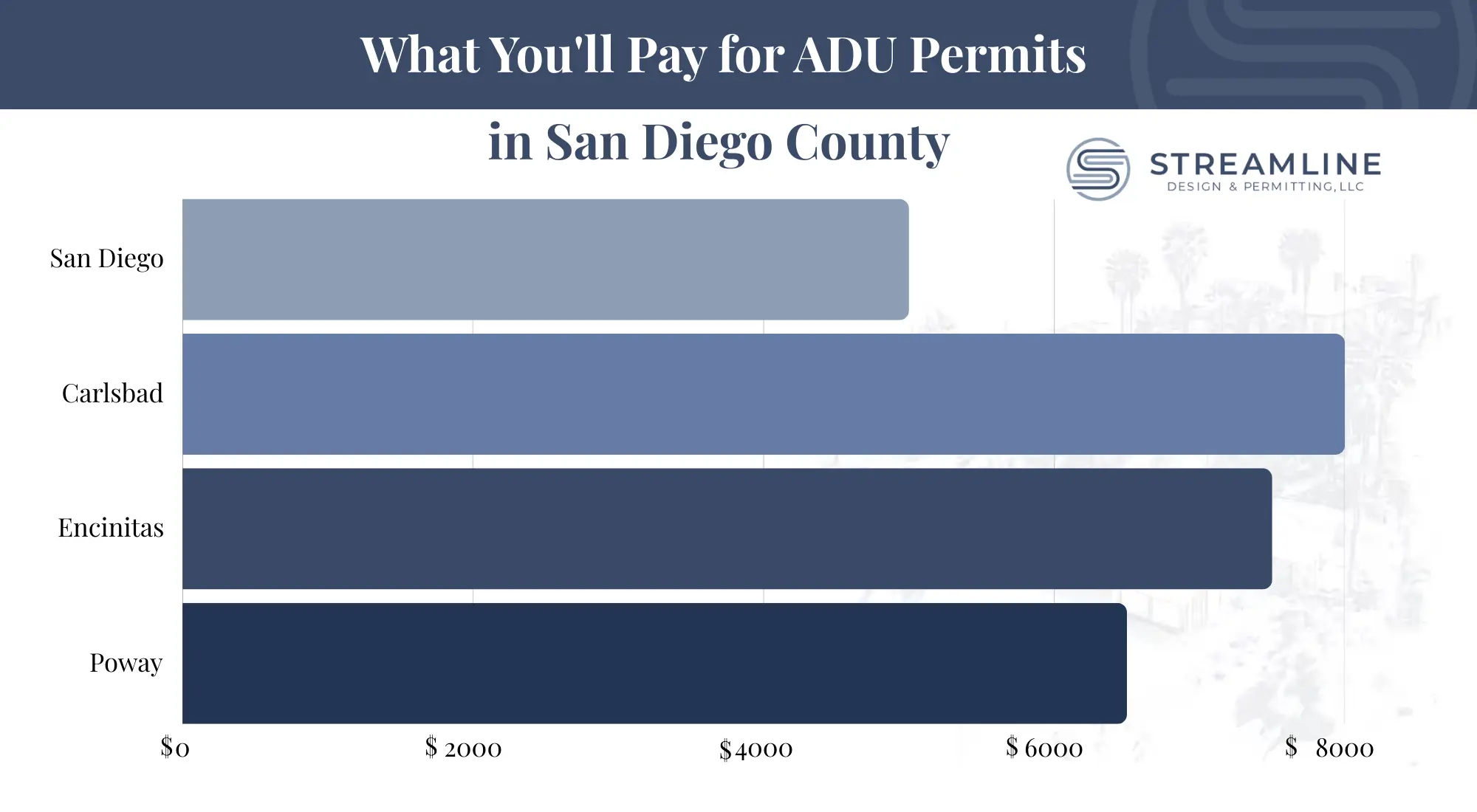
ADU permit costs in San Diego vary dramatically by jurisdiction. Building permits range from $3,000 to $8,000, while plan check fees add $2,000 to $5,000. School fees apply to units over 500 square feet at $5.17 per square foot through San Diego Unified.
Water capacity fees run approximately $1,524, and sewer capacity fees cost $2,577, both assessed at 0.5 Equivalent Dwelling Units for ADUs. Electrical panel upgrades typically cost anywhere from $3,000 to $5,000 for 200-amp service installation.
Working with your local building department early helps clarify jurisdiction-specific rules and reduces approval delays.

Hidden Cost Factors
Beyond basic construction and permits, carriage house ADUs trigger expenses many homeowners never anticipate. In our experience, these overlooked costs can add $30,000 to $50,000 to your project.
- Existing car garage demolition if foundations fail: Complete teardown and rebuild costs $10,000 to $25,000 when structural assessments reveal inadequate footings or slab deterioration.
- Bathroom placement premiums: Positioning bathrooms directly above garage space costs 30% more than adjacent placement due to complex vertical plumbing runs and additional floor reinforcement.
- Stair configuration differences: Exterior stairs save $15,000 to $25,000 versus interior stairs, but require weatherproofing and privacy screening that adds $3,000 to $5,000.
- Temporary parking arrangements: Construction blocks garage access for four to six months, costing $200 to $500 monthly for alternative parking or storage unit rentals.
- Landscape restoration after utilities: Trenching for sewer, water, and electrical connections destroys driveways and landscaping, requiring $2,000 to $5,000 in restoration work.
- HOA architectural reviews: Homeowners associations charge $500 to $2,000 for design reviews, often requiring multiple submissions before approval.
- Increased property insurance: Adding an ADU raises premiums by $800 to $1,500 annually, with some carriers requiring policy restructuring or umbrella coverage.
Important note: Properties requiring complete garage rebuilds often discover asbestos or lead paint that requires specialized abatement at $5,000 to $15,000 additional cost.
For example, the total project investment for a 750-square-foot carriage house ADU typically lands between $200,000 and $300,000. Site-specific structural assessments are a great way to get an accurate idea of the budget before construction begins, preventing costly mid-project surprises.
Common Issues and How to Avoid Them
Proper planning can help prevent predictable carriage house ADU projects. Learning from others' mistakes saves thousands in change orders and months of delays. These solutions address the most frequent above-garage ADU complications.
Structural Surprises
- Inadequate foundations discovered during excavation: Pre-construction soil testing and concrete sampling reveal issues early, costing $1,500 but potentially saving $30,000.
- Hidden dry rot or termite damage: Invasive inspections using borescopes before design completion catch problems while solutions remain flexible.
- Outdated knob-and-tube wiring: Electrical evaluations during feasibility studies identify code violations before permit submission.
Permit Delays and Rejections
- Incomplete plan submissions: Using permit expeditors familiar with each jurisdiction prevents multiple review cycles.
- Missing consultant reports: Title 24, soils, and arborist reports must accompany initial submissions to avoid 60-day delays.
- Conflicting architectural and structural plans: Pre-submission coordination meetings between design professionals catch discrepancies.
Construction Complications
- Neighbor privacy objections: Story poles installed before permitting show actual heights and allow design adjustments.
- Limited crane access: Site logistics planning determines equipment needs before construction pricing.
- Weather delays: Scheduling exterior work from May through October prevents moisture delays.
Post-Construction Problems
- Garage door vibrations: Resilient channels and double drywall prevent noise transfer between levels.
- Moisture at the ceiling interface: Proper flashing and waterproof membranes prevent water damage.
- Inadequate ventilation: Continuous soffit and ridge vents prevent condensation in wall cavities.
In reality, most carriage house ADU failures stem from inadequate pre-construction planning or choosing contractors who don’t have vertical construction experience. This is why it’s essential to partner with specialists who understand both structural engineering and local permit requirements to prevent these expensive mistakes.
ADU Above Your Garage: Permit and Construction Timeline
Carriage house ADU projects follow predictable phases from initial concept through occupancy certificate. Understanding each stage helps coordinate financing and manage expectations. San Diego's ministerial approval process typically takes 10 to 12 months total from the first sketch to the first tenant. We’ve outlined what you need to know at each stage.
Pre-Design Phase (2-4 Weeks)
Site evaluation determines structural feasibility and costs before investing in plans. Surveyors verify property lines and easements if they’re required for height calculations. At this point, the planning department staff provides zoning confirmation during counter consultations.
HOA architectural committees require preliminary approval before official plan development. This phase costs $2,000 to $5,000, but it helps prevent expensive surprises later.

Design and Engineering Phase (6-10 Weeks)
Next, architectural floor plans are developed through multiple client revision rounds, averaging three iterations. Structural engineers calculate loads and specify beam sizes, foundation requirements, and shear wall placement. Title 24 energy consultants model heating, cooling, and insulation requirements.
Retroactive building permits may be needed if unpermitted garage modifications are discovered during this phase.
Permit Review Process (8-16 Weeks)
San Diego promises 60-day initial reviews, but corrections often extend timelines to four months. Plan check engineers issue correction lists requiring responses within 90 days. Building permits trigger separate electrical, plumbing, and mechanical permit applications. Coastal Development Permits add anywhere from 3-6 months for properties within the Coastal Overlay Zone, and each jurisdiction maintains different review speeds.
Construction Phase (4-6 Months)
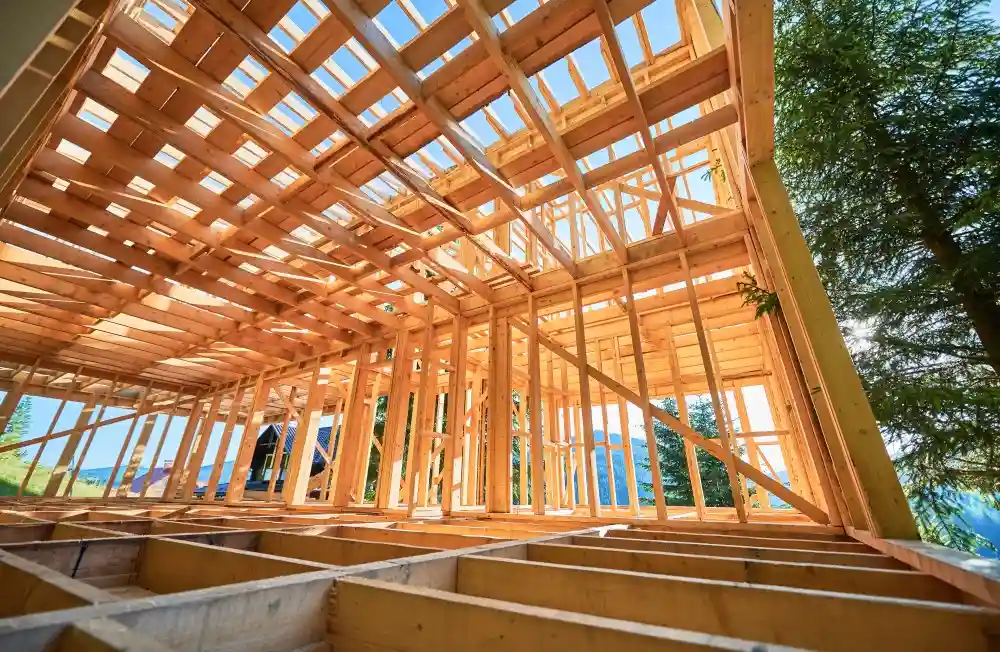
Foundation work and structural reinforcement consume the first month of construction. Framing, roofing, and exterior stairs require six to eight weeks with weather delays, while rough utilities and insulation inspections happen at week 12.
Interior finishes, including drywall, flooring, and fixtures, take eight weeks. Final inspections and certificate of occupancy processing add two weeks minimum.
The total project duration from initial concept to move-in ready typically spans 10 to 12 months. It’s important to work with experienced permit expeditors to reduce approval delays, while proper contractor scheduling prevents construction bottlenecks.
Transform Your Garage into an Income-Generating Living Space
Carriage house ADUs above garages create significant value through $24,000 to $36,000 annual rental income, and ultimately, property value increases exceed construction costs. Executing this type of project successfully requires understanding local height limits, realistic structural reinforcement budgets, and careful attention to fire separation requirements unique to vertical construction.
Streamline Design & Permitting specializes in San Diego carriage house ADU projects, with 45+ successfully permitted ADUs across all 18 county jurisdictions. Our team handles everything from structural feasibility studies through permit approval, ensuring your above-garage ADU meets specific city requirements while maximizing your investment potential. Contact us today to transform your unused garage airspace into valuable rental property with complete confidence in the process.