California's ADU size limits shape every aspect of planning, but here's what most homeowners miss: state maximums are only the starting point. Local cities add their own requirements, setback rules shift your buildable area, and bedroom count directly impacts allowable square footage under ADU regulations. Not sure where to begin? Don’t stress.
Working with specialists in ADU design and permitting cuts through the confusion by applying expertise in California's codes and local zoning requirements to keep your project compliant from day one. This guide breaks down California's 2026 ADU size regulations and the real-world factors that determine what you can actually build.
California's ADU Size Regulations: The Foundation
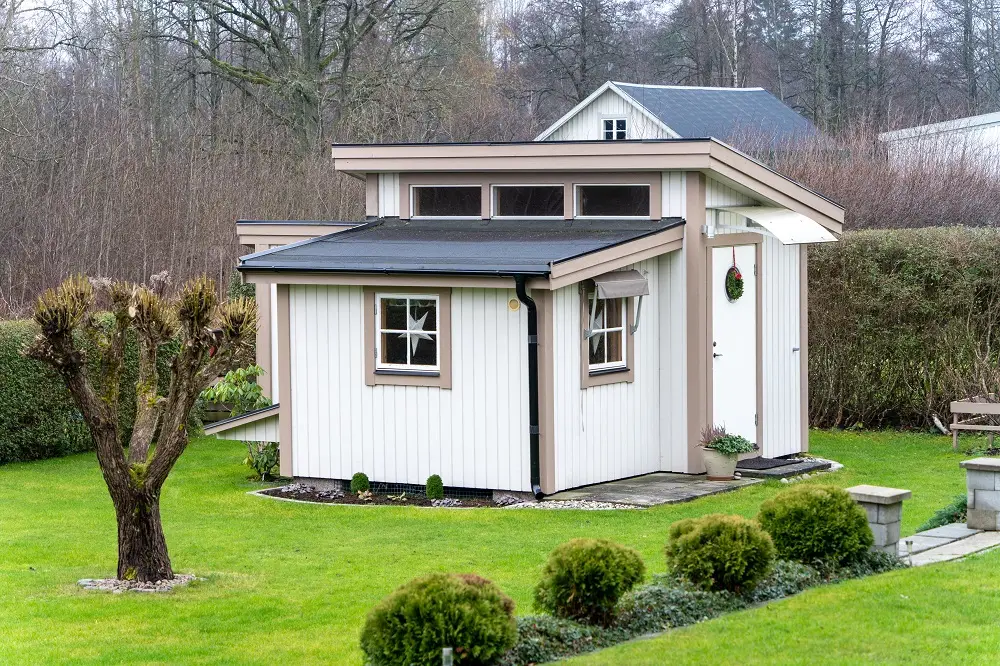
California state law establishes minimum guarantees that no local jurisdiction can undercut, according to the California Department of Housing and Community Development. These baseline protections mean every homeowner across the state has access to reasonable ADU development opportunities, regardless of where they live.
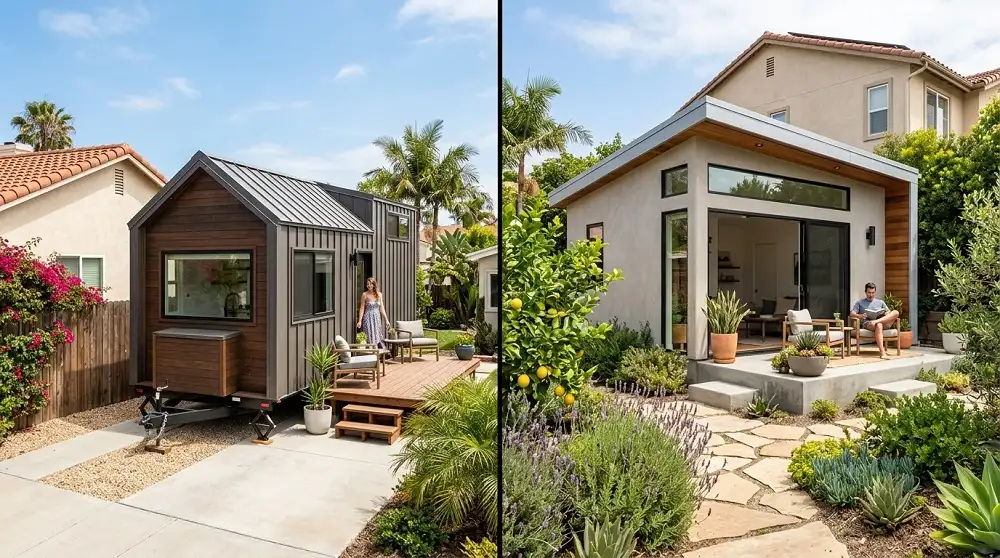
The statewide maximum for detached ADUs remains 1,200 square feet, and cities cannot set lower maximums than this figure. For attached ADUs sharing a wall with your primary dwelling unit, the limit is either 1,200 square feet or 50% of your main home's existing floor plan, whichever is less.
Junior ADUs carved from existing living areas max out at 500 square feet and must be created within your primary residence footprint, typically including an efficiency kitchen with shared bathroom access. Local jurisdictions still have the authority to allow larger ADUs beyond these state minimums, especially in areas near transit or on multifamily properties where some San Diego neighborhoods permit ADU space exceeding standard limits when projects align with density goals.
How Bedroom Count Affects Your Maximum ADU Size
California's ADU size regulations directly link square footage limits to the planned number of bedrooms. This connection prevents oversized studios while ensuring families have adequate livable space in multi-bedroom layouts.
State law guarantees cities must permit at least 850 square feet for studio or one-bedroom ADUs. For units with two or more bedrooms, the minimum jumps to 1,000 square feet. These thresholds protect homeowners from municipalities attempting to restrict ADU development through artificially small size caps.
The bedroom-to-size ratio doesn’t only impact approval. Larger ADUs with multiple bedrooms command higher rental income in San Diego's housing market, often generating several hundred dollars more monthly than comparable studios. Homes with two-bedroom layouts often see stronger value increases.
Design efficiency is particularly important in smaller footprints. For example, a well-planned 800-square-foot one-bedroom ADU can feel more spacious than a poorly configured 1,000-square-foot two-bedroom unit. Open floor plans, natural light placement, and strategic storage maximize usable space within California's size limits.
Detached vs. Attached: Key Size Differences
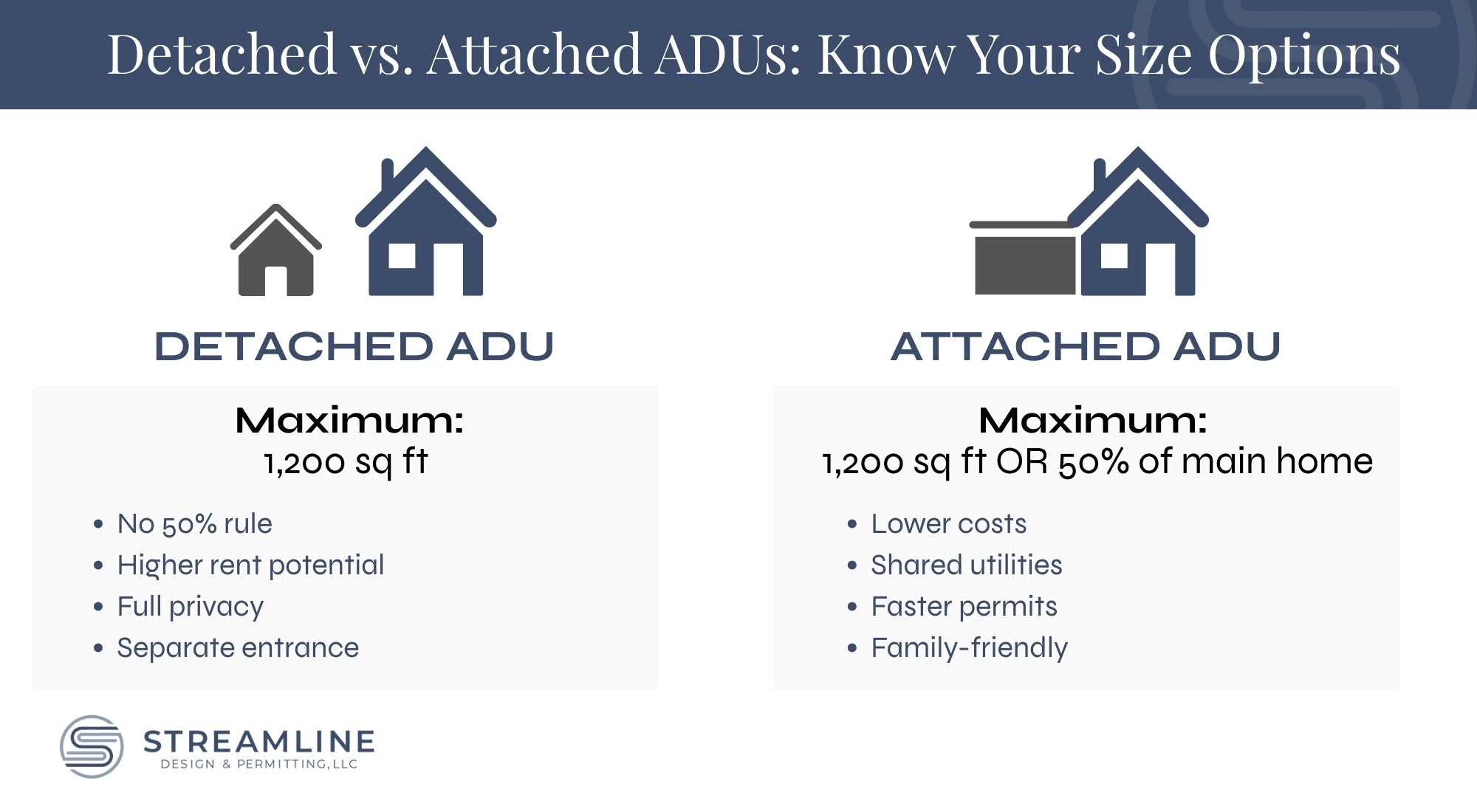
Your ADU's relationship to the main residence fundamentally alters applicable size regulations, with detached units and attached units operating under different rulebooks that each offer distinct advantages for homeowners who want to maximize space.
Detached ADU Advantages:
- State guarantees up to 1,200 square feet regardless of your primary residence size or lot dimensions.
- Physical separation provides privacy that tenants value, typically supporting $150-300 higher monthly rents in San Diego markets.
- Ideal for garage conversions that bypass setback requirements when converting existing structures.
- Height limits typically reach 16 feet, though transit-adjacent properties may achieve 18 feet.
Attached ADU Benefits:
- Shared walls reduce framing and exterior finish requirements by 15-25%, lowering construction costs.
- Tapping into existing systems cuts plumbing and electrical expenses by $8,000-12,000.
- Many cities process attached ADU permits 2-3 weeks faster than detached applications.
- Works well for multigenerational living arrangements where families prioritize proximity without sacrificing independence.
The 50% rule significantly impacts homeowners with smaller primary residences, where a 1,600-square-foot main house limits your attached ADU to 800 square feet, well below the state maximum. Conversely, homes exceeding 2,400 square feet hit the 1,200 square foot ceiling before they reach the 50% threshold.
Junior ADUs Limits
A JADU, or Junior Accessory Dwelling Unit, is a compact, highly efficient option carved out of the existing footprint of your main home, typically by converting a bedroom, living area, or part of the garage. California sets the size limit for JADUs at a maximum of 500 square feet. These units must be created from space already inside the home, though they’re allowed to include a small efficiency kitchen and shared bathroom access.
While JADUs are smaller by design, they are budget-friendly, have faster construction timelines, and excellent flexibility for multigenerational living or home office use. And because they fall under statewide protection, cities must allow them.
Local Zoning Codes That Reduce Buildable Area
State maximums tell only part of the story, as local zoning codes, setback requirements, and lot coverage restrictions often reduce actual buildable ADU space below California's 1,200 square foot ceiling.
Critical local restrictions:
- Setback requirements: Property lines establish boundaries where 4-foot side and rear setbacks typically apply under state law, though San Diego applies 5-foot side setbacks and 10-foot rear setbacks for structures over 18 feet tall.
- Lot coverage limits: Maximum coverage restricts the percentage of your property that buildings can occupy, typically 40-50% in single-family zones, including all structures.
- Floor Area Ratio (FAR): Total building square footage relative to lot size, often capped at 0.5-0.75 in residential areas.
- Height limitations: California's baseline 16-foot height limit for detached ADUs accommodates single-story designs but restricts two-story options.
Let’s put it into context. A 5,000 square foot lot with 45% coverage allows 2,250 square feet of buildings total, meaning if your primary residence occupies 1,800 square feet, only 450 square feet remains for an ADU, regardless of state maximums. Understanding building permit requirements specific to your city prevents expensive and frustrating redesigns after your initial plan has been submitted.
Strategic Sizing: Balancing Budget, Space, and Value
When planning your ADU in California, you'll likely face the choice between building a larger unit up to the 1,200 square foot maximum for detached units or opting for a more modest size. Both options have their benefits and challenges, and understanding the trade-offs will help you make the best decision for your situation.
Construction is faster for smaller ADUs, with compact conversions taking several months while maximum-sized new builds require nearly double that timeline. A well-designed 750-square-foot one-bedroom ADU often strikes a better balance between rental income potential and construction efficiency.
The bedroom configuration impacts marketability more than raw square footage. San Diego's rental market shows consistent demand for efficiently designed one-bedroom units in the 600-800 square foot range, which rent quickly and maintain strong occupancy rates. Strategic sizing based on your specific goals, whether rental income, multigenerational living, or property value enhancement, typically outperforms simply building to the maximum allowable size.
Pre-Approved Plans and Permit Fee Savings
California’s pre-approved ADU programs offer ready-to-use designs that comply with regulations, reduce design costs, and ensure approved square footage. San Diego offers pre-approved plans ranging from 400 to 1,200 square feet, with the most popular templates clustering around 600-800 square feet to balance construction costs with rental income potential.
These templates provide guaranteed compliance, as designs are already vetted by jurisdictional plan checkers. It results in faster permitting with many cities promising 30-day approval versus 60-90 days for custom designs, and reduced plan check fees with some jurisdictions discounting 25-50% when using approved templates. Homeowners can budget accurately for their projects when they understand ADU permit costs in San Diego.
One limitation is reduced customization, since pre-approved designs may not fully account for your lot shape or maximize allowable ADU space based on your setbacks. Custom plans can squeeze additional square footage from irregularly shaped properties, but the approval timelines are longer.
Essential Planning Steps Before Finalizing Size

Strategic preparation prevents costly mid-project changes when size limitations emerge late in the design process, making these steps critical for clarifying your actual buildable area before you invest in building plans.
Critical pre-design actions:
- Verify local ADU ordinances: State law provides the floor, but cities add requirements affecting maximum square footage that vary significantly even within San Diego County.
- Conduct professional site analysis: Your lot's physical characteristics determine realistic ADU sizing more than regulatory maximums, with slope, easements, and utility locations impacting buildable area.
- Calculate total development costs by size: Budget constraints should drive size decisions as much as regulatory limits, with realistic cost projections preventing mid-construction funding gaps.
- Define intended use requirements: Your ADU's purpose determines optimal size more than maximum allowable square footage, whether for long-term rental, multigenerational living, or home office use.
We highly recommend a professional site analysis investment; it prevents significantly larger redesign expenses discovered during permit review, particularly when easements restricting rear yard development force smaller ADU footprints than originally planned. Matching size to function helps maximize both satisfaction and financial return.
Building Your Ideal ADU Starts with Expert Guidance
California's ADU size limit reaches 1,200 square feet for detached units, but your buildable area depends on local zoning codes, setback requirements, lot coverage rules, and intended bedroom count. Strategic sizing based on use case, budget, and rental market conditions often outperforms simply building to maximum capacity.
Streamline Design & Permitting is proud to deliver full-service drafting services across San Diego County, navigating complex size regulations and local ordinances to maximize your property's ADU potential. Our team has successfully permitted 45+ ADUs across all San Diego jurisdictions, so you can feel confident that your project meets every requirement while optimizing livable space. Contact us today to transform your ADU plans into an approved reality.