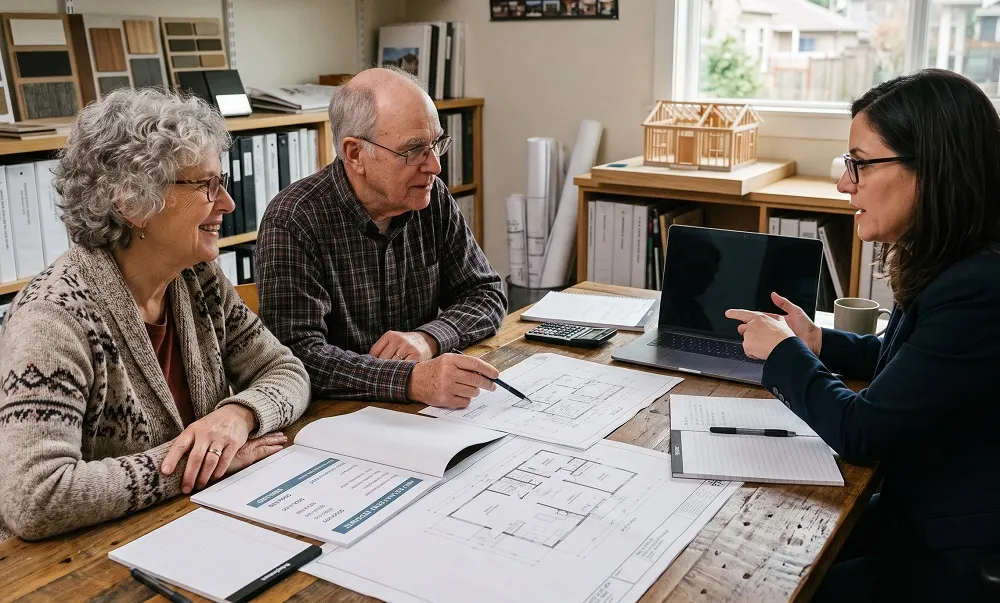
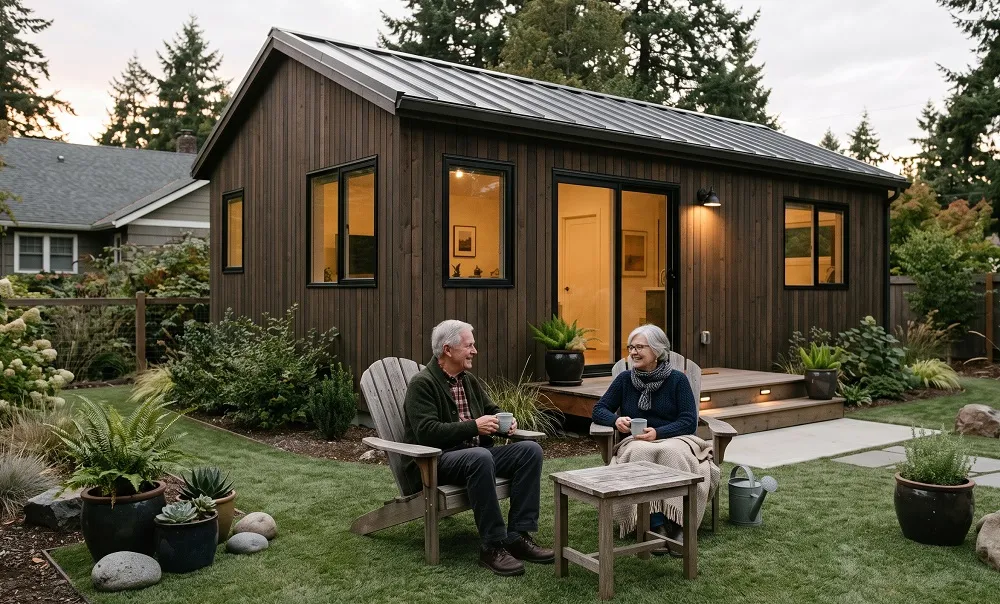
You've found the perfect corner of your backyard for a new ADU in San Diego. But one question determines whether that vision moves forward: does your property carry an easement, and can you build on it?
Easements are often overlooked during the early planning stages, but they can have a major impact on where and how an ADU can be built. Unlike setbacks or height limits, they rarely appear on a zoning map. They live in title documents, recorded plats, and deeds. Their impact on ADU design and permitting in San Diego ranges from minor adjustments to a complete halt.
What Is a Property Easement?
An easement is a legal right that allows a party other than the property owner to use a defined portion of the land for a specific purpose. For ADU planning, what matters most is where the easement is located, who controls it, and how it affects what you build in or around that portion of your property.
Public vs. Private Easements
Government agencies or utilities hold public easements and allow access for infrastructure maintenance, storm drainage, or public passage. These are the most common types of issues San Diego homeowners encounter during ADU permitting, and they carry the strictest building restrictions. Unlike public easements, private easements exist for the benefit of a neighborhood property. They carry the same legal force, but in some situations, their terms can be negotiated between the affected property owners.

Easements Appurtenant vs. Easements in Gross
An easement appurtenant is attached to a parcel of land and transfers automatically when either the dominant or servient property is sold — new owners on either side inherit the arrangement.
An easement in gross benefits a specific person or entity, not a parcel; utility easements held by SDG&E or the San Diego County Water Authority are the most common example. Knowing which type of easement affects your lot is the first step in understanding who you would need to work with if changes to the easement are possible.
Express vs. Implied Easements
Express easements are created through a written document and are typically the easiest to identify through a preliminary title report.
Implied easements arise from the circumstances of a prior property configuration rather than a written grant, and they can surface unexpectedly during plan check if a title search wasn't completed before design work began. Implied easements typically require a more detailed legal and historical analysis, including a review of prior ownership, property use, and the relationship between adjacent parcels.
#cta_start
Not Sure What Easements Are on Your Property?
A preliminary property assessment can identify site constraints before you invest in design. Our pre-construction team reviews your lot conditions, title documents, and local code requirements so there are no surprises at plan check.
#cta_end
Can You Build an ADU on an Easement?
The short answer is: usually not within the easement boundary itself, but often yes on the remainder of your lot, as long as enough buildable area remains after accounting for the easement footprint, setbacks, and any buffer distances the reviewing agency may require. If you're still evaluating how many ADUs you can build on your property, easement constraints are one of the first site conditions that narrow that number in practice. Both apply independently, and the ADU's buildable envelope is whatever space remains after satisfying all constraints simultaneously.
The 6-Foot Buffer Rule Near Sewer Easements
The City of San Diego requires a six-foot buffer zone from the edge of a sewer easement, even when the ADU itself is located entirely outside of it. The City's Sewer Design Guide also establishes ten-foot horizontal separation requirements for utility lines near sewer mains, and reviewers may require a line-of-influence diagram to demonstrate that the ADU's foundation won't structurally affect the underground pipe. Because these reviews evaluate constructability and future maintenance access, they often become an issue during plan check if they weren’t addressed early in the project.
How Different Easement Types Affect ADU Projects
Not all easements create the same constraints. How it impacts your ADU project depends on who holds the easement, what use it protects, and where it falls on the lot relative to your planned building area.

Public Utility Easements
Public utility easements held by SDG&E, the San Diego County Water Authority, or municipal sewer agencies protect the right to access, maintain, and replace infrastructure without the property owner's consent. Building within them is generally prohibited. For detached ADUs and garage conversions, the safest approach is to design around the easement, using a preliminary title report and boundary survey to establish exact boundaries before any design work begins.
Access and Driveway Easements
Private access easements grant an adjacent parcel the right to cross your property via a defined corridor. The easement area must remain usable for the party who holds the rights. If an ADU or other improvement blocks that access, it can create legal and permitting issues. For an attached ADU expanding into a side yard where an access easement crosses, confirming exact boundaries and consulting legal counsel before finalizing plans is the right step.
Drainage and Storm Water Easements
Drainage easements protect the flow of stormwater through defined channels or culverts, and structures cannot typically be built within them. San Diego County properties in hillside communities or areas with significant grade change are most likely to carry these. For second-story additions or detached ADUs that involve site grading, drainage easements can also limit how the land may be regarded and where retaining walls can be installed.

Historic Alleyway and Plat Easements
In older San Diego neighborhoods, subdivision plat maps sometimes recorded ten- or twenty-foot alleyway easements that the County or City later vacated in obscure recorded documents. A plan check reviewer may still flag the historic easement if it appears on the original plat map, even if formally eliminated. Proving vacation requires locating the recorded ordinance or resolution, which can require research into older County records best handled by a title professional experienced in San Diego County property history.
Utility Connections Across Easements
Even when an ADU is placed entirely outside an easement, its utility connections may still need to cross it to reach the main lines. In San Diego, crossing a sewer easement with a new lateral typically requires running the pipe perpendicular to the easement using solid C-900 PVC pipe, installing visible markers at the easement boundary, and securing an encroachment permit from the relevant agency.
Additional coordination with the Department of Environmental Health may be needed for properties served by a septic system rather than a municipal sewer. Budget for this possibility early, as utility routing that must navigate around or cross an easement increases sitework costs.
Read more about San Diego ADU setback requirements and Title 24 energy calculations, which are two additional pre-construction factors that interact with site layout decisions.
How Easements Can End
Property easements are not always permanent, and several legal mechanisms allow them to be modified, relocated, or terminated.
- An express written termination between the parties is the most reliable method. For a private easement between neighboring property owners, both parties can agree in writing to end it, and that termination should be recorded with the San Diego County Recorder's Office so it binds subsequent owners.
- Merger terminates an easement appurtenant when one owner acquires both the dominant and servient properties, extinguishing the easement by operation of law.
- Abandonment by the easement holder can also extinguish an easement but requires clear evidence of intentional relinquishment — non-use alone is generally not enough under California law.
- A county or сity vacation is how historic alleyways and public easements are formally eliminated through a recorded resolution or ordinance.
Attempting to build where an easement may still be active is a significant legal and permitting risk. A title attorney should confirm easement status before the land is incorporated into a design.
Why Easements Matter Before You Buy a Property

Easements can directly limit development opportunities and affect long-term property value in ways that aren't visible during a standard walkthrough. A lot that looks like a strong ADU candidate based on size and zoning may have encumbrances that only appear in title documents and not on a listing.
Before purchasing a property with ADU development in mind, watch for these common easement-related risks:
- A public utility easement running through the rear yard that eliminates the primary build area;
- A private access corridor crossing the only viable placement zone for a detached unit;
- A historic alleyway easement that appears on the original plat but hasn't been formally vacated;
- Utility routing constraints that add significant cost if connections must cross an easement to reach the main lines.
Getting a preliminary title report before closing identifies every recorded encumbrance, giving you the information you need to assess whether your development goals are feasible before you're legally committed to the purchase. If a title report reveals an important easement, the next step is often a boundary survey. This identifies the easement’s exact location on the lot so you can see how it affects the space available for an ADU.
The purchase price should reflect easements that affect ADU feasibility. Resolving these questions before closing, rather than after, is the difference between a property that supports your goals and one that works against them.
#cta_start
Planning an ADU in San Diego County?
Streamline Design & Permitting handles your project from property assessment through permit issuance, ensuring compliance with California's latest ADU laws and local requirements.
#cta_end
What Easement Findings Mean for Your ADU Project
Discovering an easement isn’t the same as discovering your ADU isn't buildable. For most San Diego lots, a viable project is possible as long as placement, utility routing, and any legal coordination are resolved before design is finalized.
Projects that encounter easements during plan check rather than pre-construction face avoidable redesigns and delays. Contact Streamline Design & Permitting to assess your site before committing to a design.